

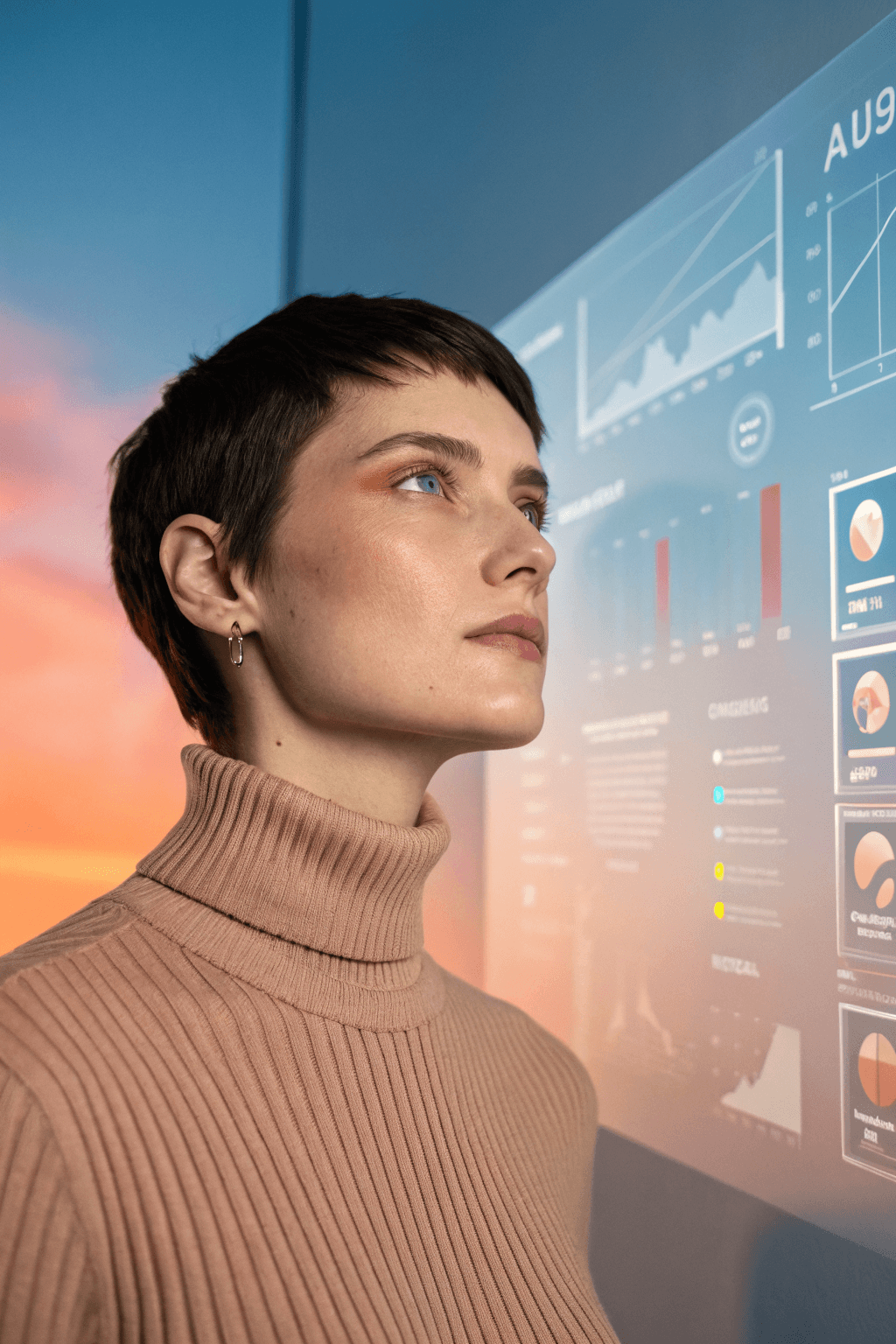
ByteDance dropped Seedream 5.0 Pro on July 8, and it does something most image generators still cannot: let you edit a single element inside the image without regenerating the whole thing. Point at a region, tell it what to change, and it changes just that part. Then it splits the result into more than 10 separate layers you can drag, resize, and rearrange in your design tool.
This is the first AI image model from ByteDance that genuinely targets production design work rather than one-off generation. Here is what it can do, what the output looks like, and how to start using it.
Four Things Seedream 5.0 Pro Does That Others Do Not
1. Pixel-level precision editing
Most image generators force you to regenerate the entire image if one detail is wrong. Seedream 5.0 Pro lets you select a specific region using point selection, lasso, or box selection, then change just that area. You can swap a sofa’s material and colour using a hex code and a reference image. You can outline zones with different coloured frames and have the model fill each zone with a different subject, keeping everything within its boundary.
The model also supports sketch rendering: draw a rough colour block layout, and it renders a high-fidelity image that respects your spatial intent. A poster sketch with rough zones for a title, illustration, and date becomes a finished poster with felt textures and stitched edges, all from a single rough layout.
2. Layer separation into editable assets
This is the feature that changes workflows. Seedream 5.0 Pro can take a completed image and separate it into more than 10 independent layers: text, main subject, background, and environmental details each land on their own layer with transparency preserved. The background areas that were hidden behind the main subject get seamlessly inpainted and restored.
You can drag, scale, and rearrange each layer in your design tool. You can even swap the core subject for something entirely different, like replacing a parrot illustration with a peacock, and the model fills in the gap.
For anyone who has ever spent 20 minutes prompting an image generator only to get something where one element is wrong and the whole thing needs re-rolling, this is a fundamentally different way to work.
3. High-density infographic generation
Seedream 5.0 Pro has been specifically trained on information layout and visual data design. It can produce complete infographics in a single pass: timelines, bar charts, pie charts, line graphs, and realistic imagery all composed within one frame.
It rendered an Antarctic research station infographic with a timeline, size comparison chart, energy pie chart, sunshine line graph, and fieldwork flowchart, all in one prompt. It also produced a tea classification infographic with a central flavour wheel, oxidation bars, and brewing temperature thermometers, all with correct text rendering.
For small businesses that need social posts, pitch decks, or product comparison graphics, this is the kind of output that used to require a designer and a template.
4. Multilingual text rendering in more than 10 languages
Text in AI images has been unreliable for years. Seedream 5.0 Pro natively renders text in Chinese, English, French, German, Russian, Japanese, Korean, Spanish, and Arabic, including right-to-left layout and accent marks. It can translate a foreign menu into your language while preserving the original layout, or generate a multilingual sale poster with mixed fonts and correct spacing.
For businesses selling internationally, this is a capability that GPT-Image 2 and most other generators still struggle with.
What the Output Actually Looks Like
The model produces images up to 2048 by 2048 pixels at roughly $0.03 to $0.09 per image depending on resolution. Here is what stands out in the examples ByteDance has published:
- A pet e-commerce homepage mockup where the dog’s paw breaks through the image boundary and presses a button on the left side, demonstrating cross-layer interaction
- A winter sale poster with dense multi-line text rendered without spelling errors, alternating between bold and handwritten fonts
- A panning shot of a cyclist with tack-sharp subject, motion-blurred background, and rotational blur on the wheel spokes
- A group photo composited from five separate individual portraits, each person placed in their correct position with consistent lighting and texture across the entire scene
The realism on materials is noticeably improved. Glass storefronts show natural environmental reflections layered over halftone poster textures. Coastal villas demonstrate complex light transitions between warm indoor lighting, sunset, and multiple sea reflections. Skin texture shows pores, lines, and matte transitions rather than the plastic-smooth look that plagued earlier models.
How It Compares to GPT-Image 2 and Nano Banana Pro
Seedream 5.0 Pro does not beat GPT-Image 2 on pure text accuracy. GPT-Image 2 still scores around 98.5% on text rendering benchmarks compared to Seedream’s 89.5%. But Seedream wins on three fronts that matter for actual production work:
- Price: roughly $0.03 per image at lower resolutions, compared to $0.28 for GPT-Image 2’s quality tier
- Editing: the only model of the three that offers layer separation and regional editing without full regeneration
- Multilingual support: the strongest text rendering across more than 10 languages, including right-to-left scripts
Nano Banana Pro still wins on speed at roughly 1.8 seconds per image, but it lacks the editing and layer tools entirely.
The short version: GPT-Image 2 for typography and branding where every letter matters, Nano Banana Pro for fast social content, Seedream 5.0 Pro for design work where you need to edit, layer, and iterate.
How to Use Seedream 5.0 Pro
You can access it through several routes:
- Volcano Ark: ByteDance’s own platform, the first place Pro went live
- Doubao and Jimeng: ByteDance’s consumer apps, free within daily limits
- BytePlus, fal.ai, and Magnific: API and hosted interfaces for developers
- ComfyUI: already supported for node-based workflows
API pricing starts around $0.032 per image at lower resolution and roughly $0.09 for full 2048 by 2048 output. The first reference image in multi-reference inputs is typically free.
For small businesses, the fastest way to test it is through Doubao or Jimeng if you have access, or through fal.ai’s hosted playground if you want to try the editing features without writing code.
What This Unlocks
Layer separation and precision editing change what AI image generation is for. Instead of treating an AI image as a finished product you either accept or discard, you can now use it as a starting point and refine it. That is the difference between generating an image and generating a design asset.
The multilingual text rendering opens up international marketing without hiring a separate localisation designer for each language. The infographic capabilities give businesses without a design team a way to produce data-rich social content in a single prompt rather than cobbling together charts in Canva.
Seedream 5.0 Pro is not the best image generator on every benchmark. But for production workflows where you need to edit, layer, and ship, it is the first model built specifically for that job.
Want more like this? Join MOKU CLUB for free. Weekly resources, early access to new guides, and occasional templates you can actually use. Join below.